
Products Profile
Material Introduction
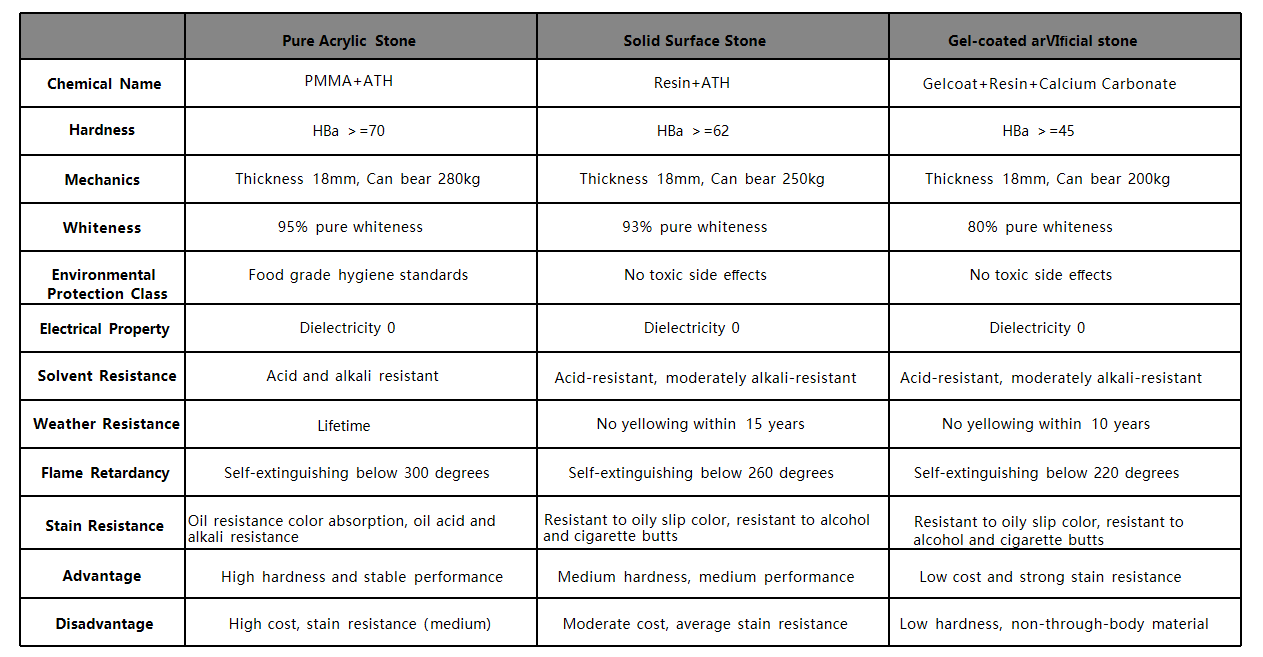
The foundation of our product excellence lies in our deep expertise and selective application of three advanced material technologies.
Pure Solid Surface Stone

Catalyst ----------------------------------- 0.05%
Curing Agent ---------------------------- 0.70%
PMMA ------------------------------------ 40.0%
ATH: Aluminum TryHydrate --------- 56.0%
Other---------------------------------------3.25%
Modified Solid Surface
Catalyst ---------------------------------- 0.20%
Curing Agent ---------------------------- 0.50%
PMMA ------------------------------------ 40.0%
ATH: Aluminum TryHydrate --------- 56.0%
Other---------------------------------------3.30%
Gel-coated Resin stone
Catalyst ---------------------------------- 0.20%
Curing Agent ---------------------------- 0.50%
Gelcoat ------------------------------------ 40.0%
Unsaturated Polyester Resin --------- 56.0%
Calcium Carbonate --------------------- 3.30%
Productive Process
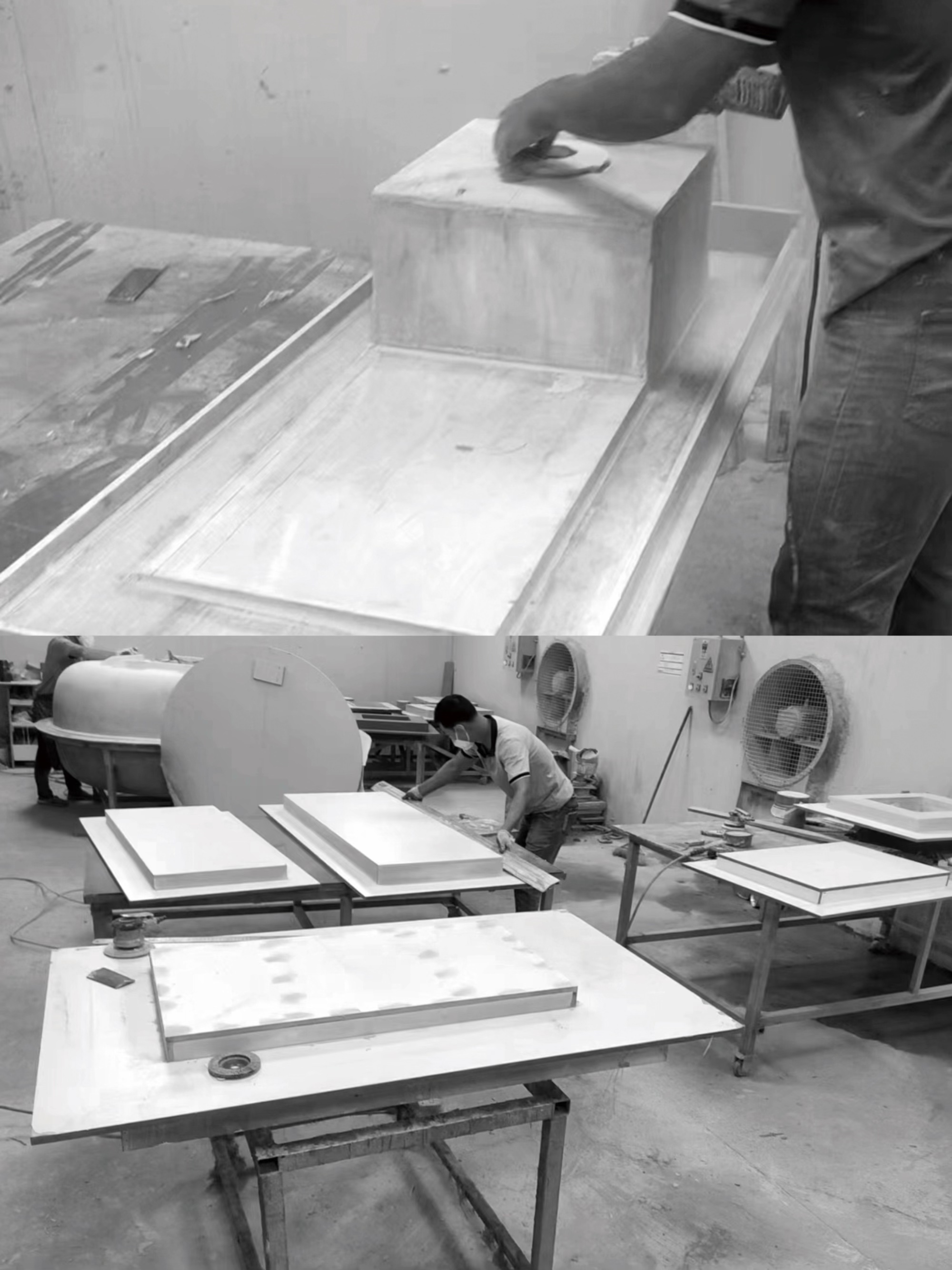
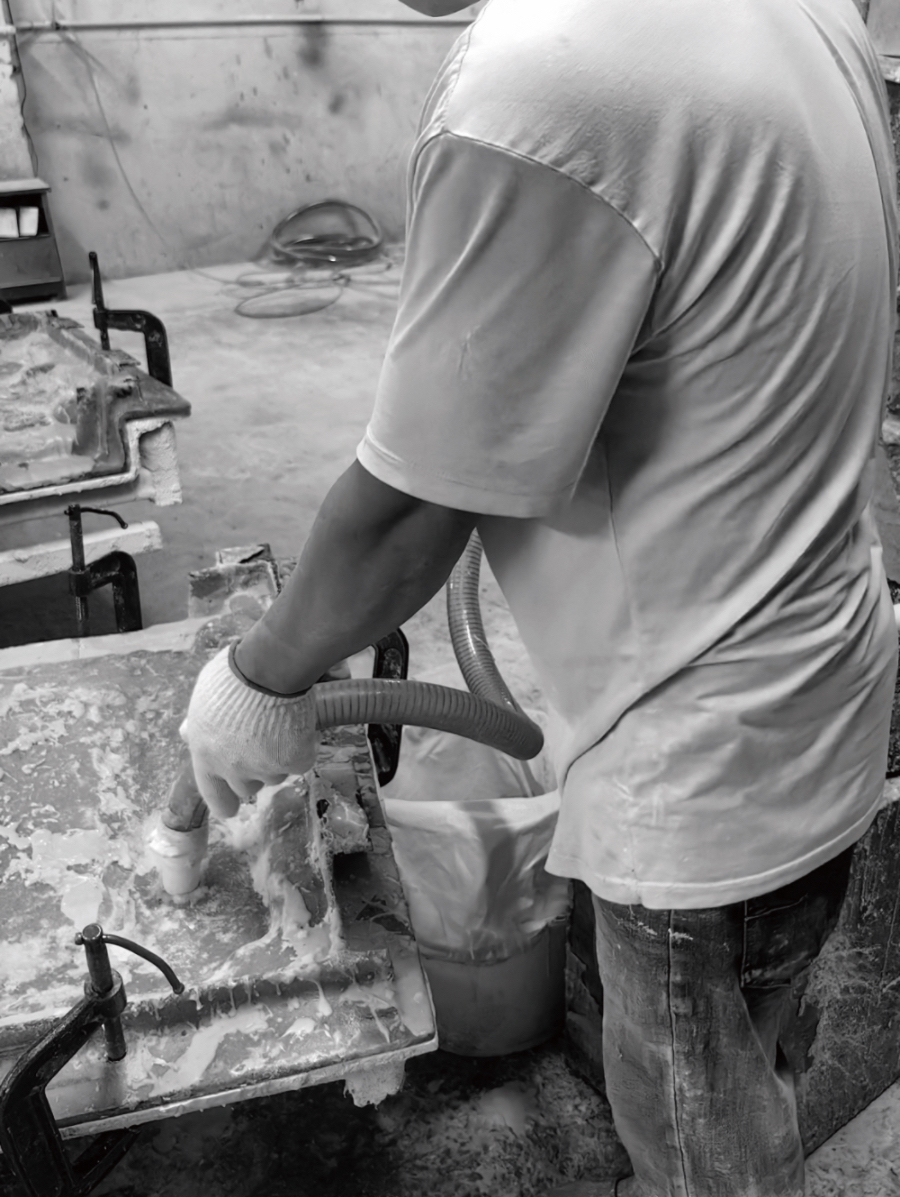
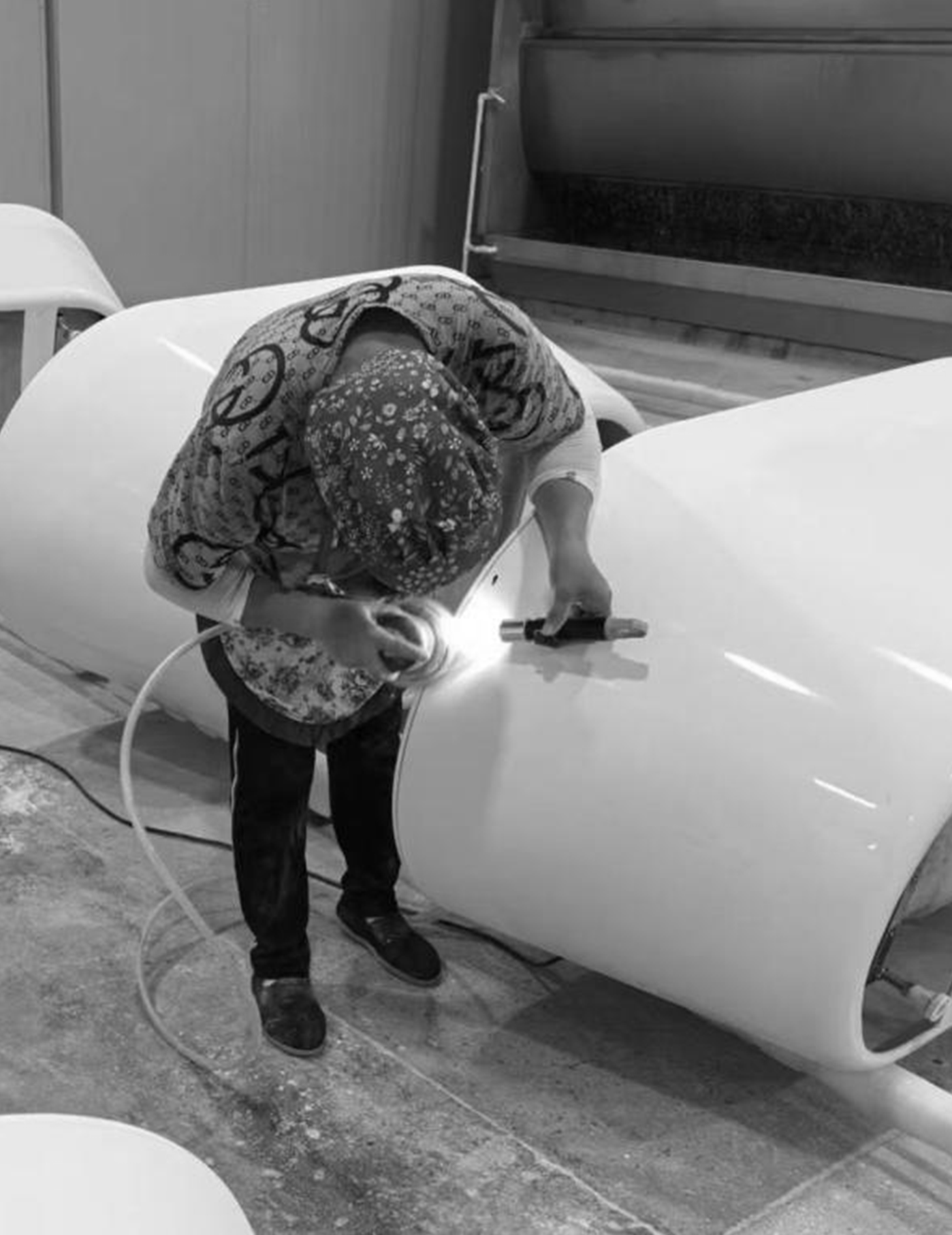
Pure Solid Surface Stone
Modified Solid Surface Stone

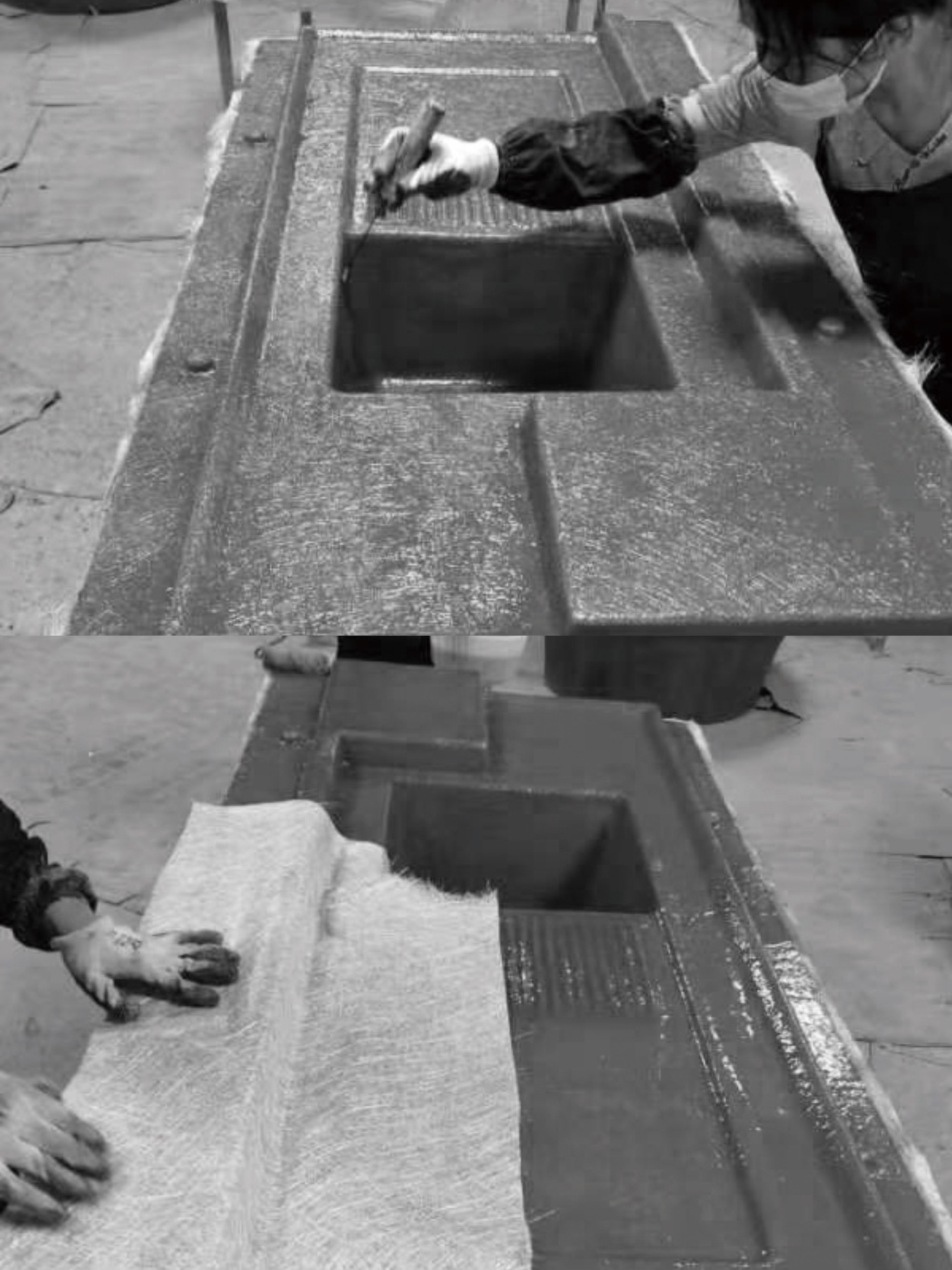

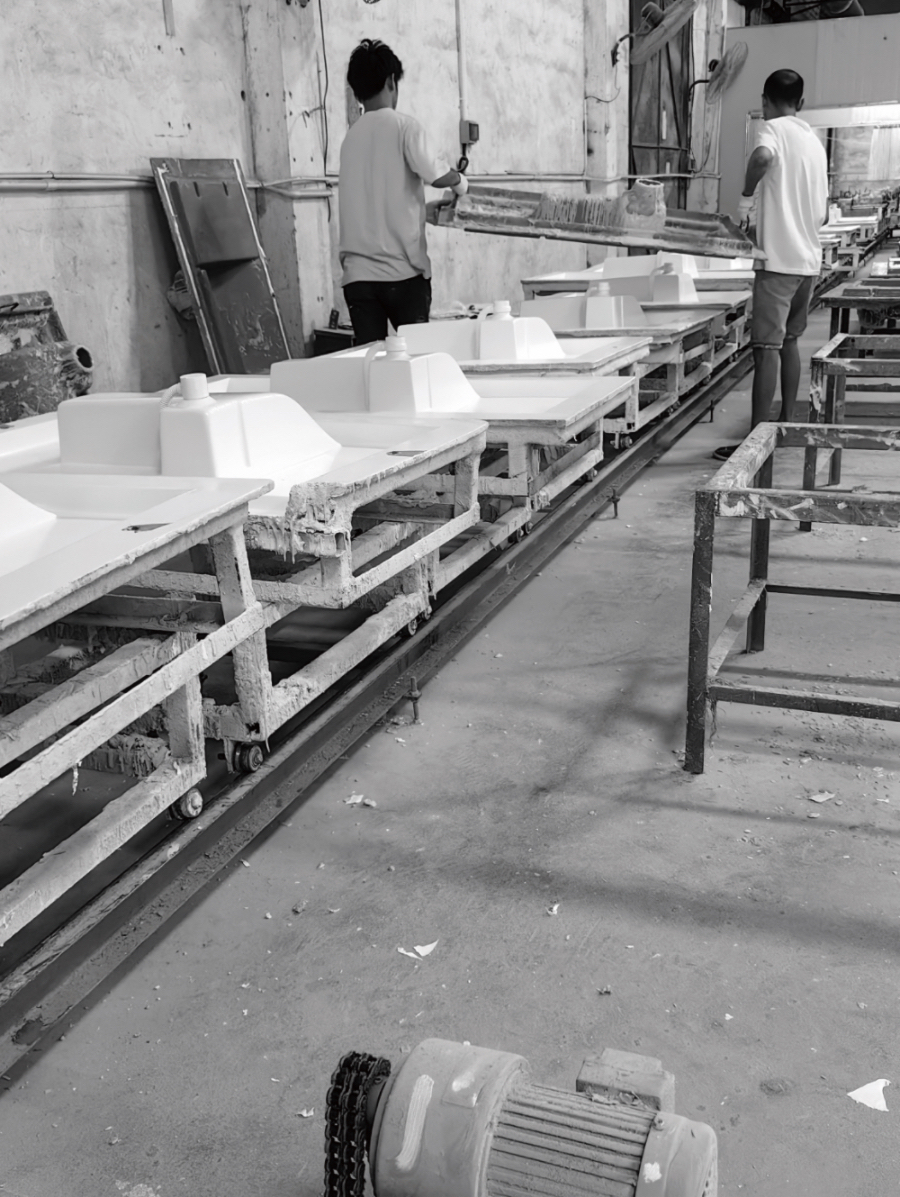
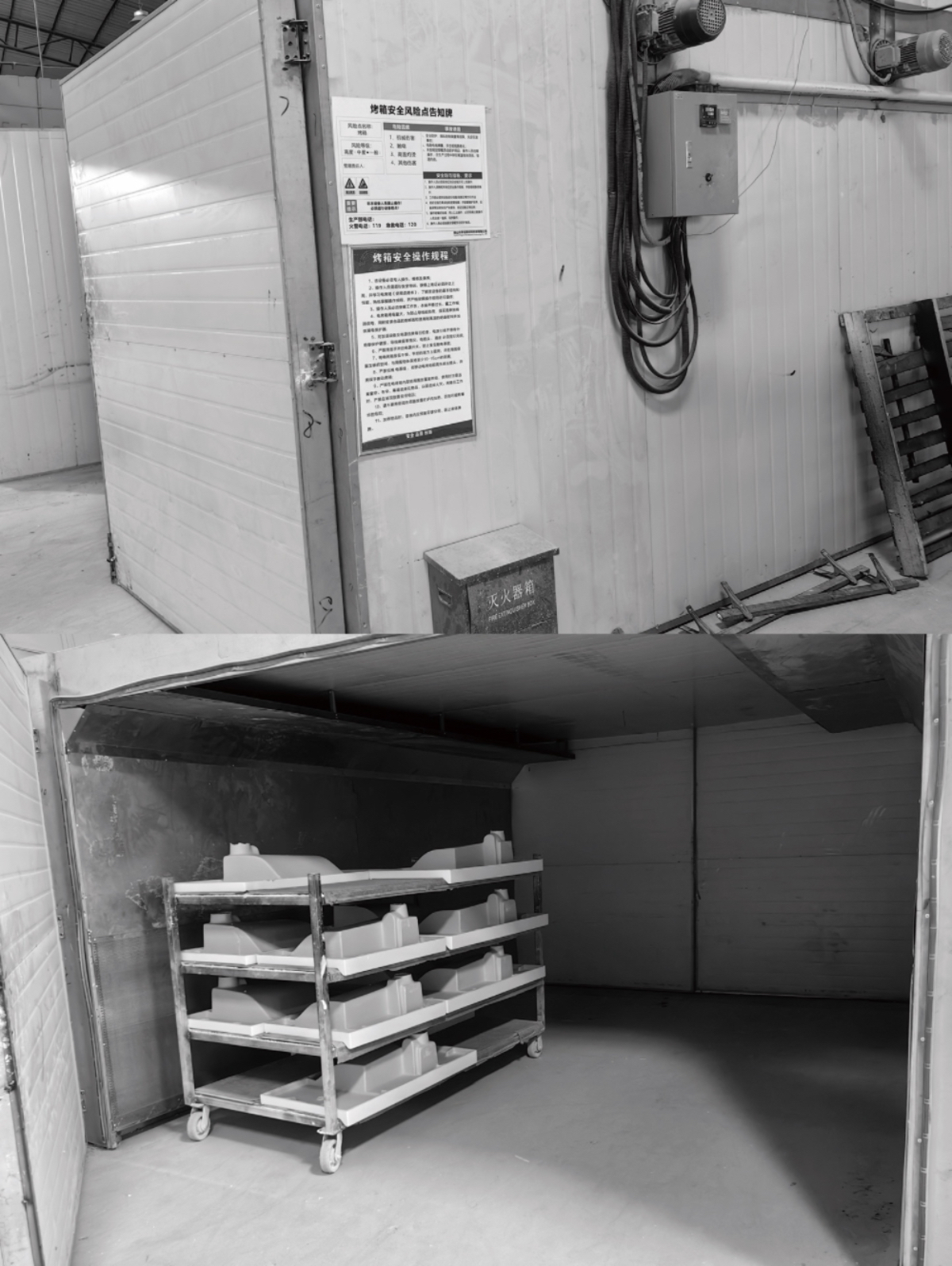


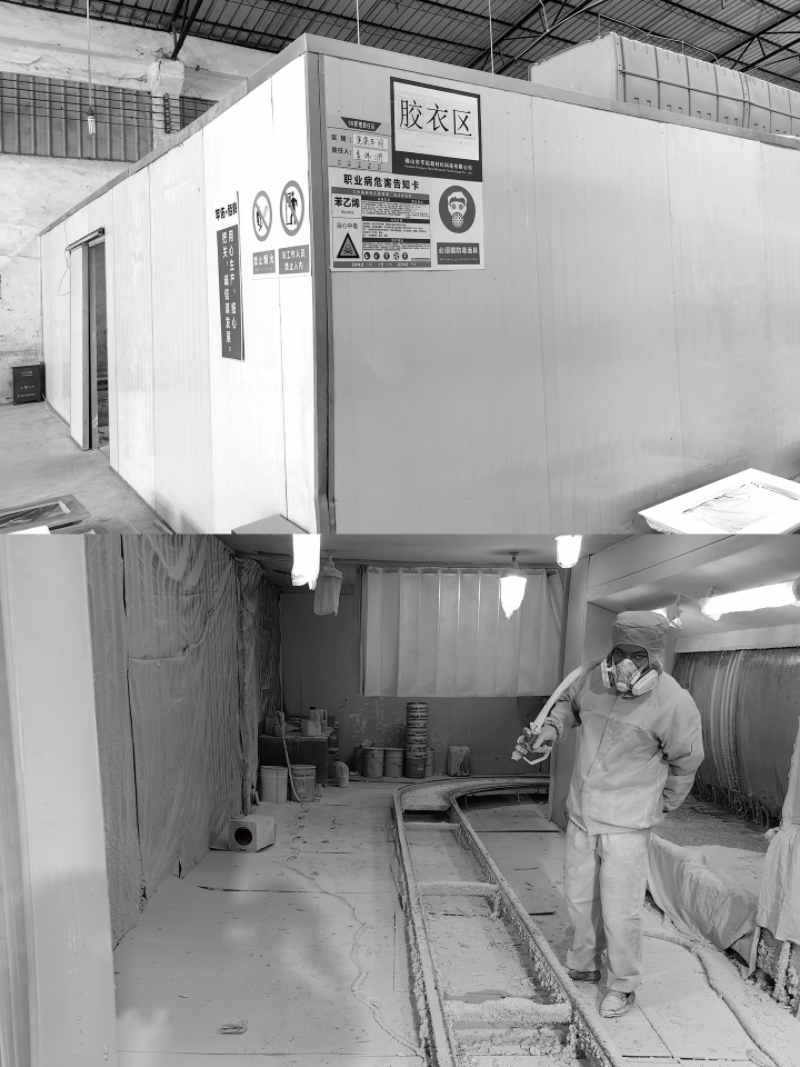
Gel-coated artificial stone



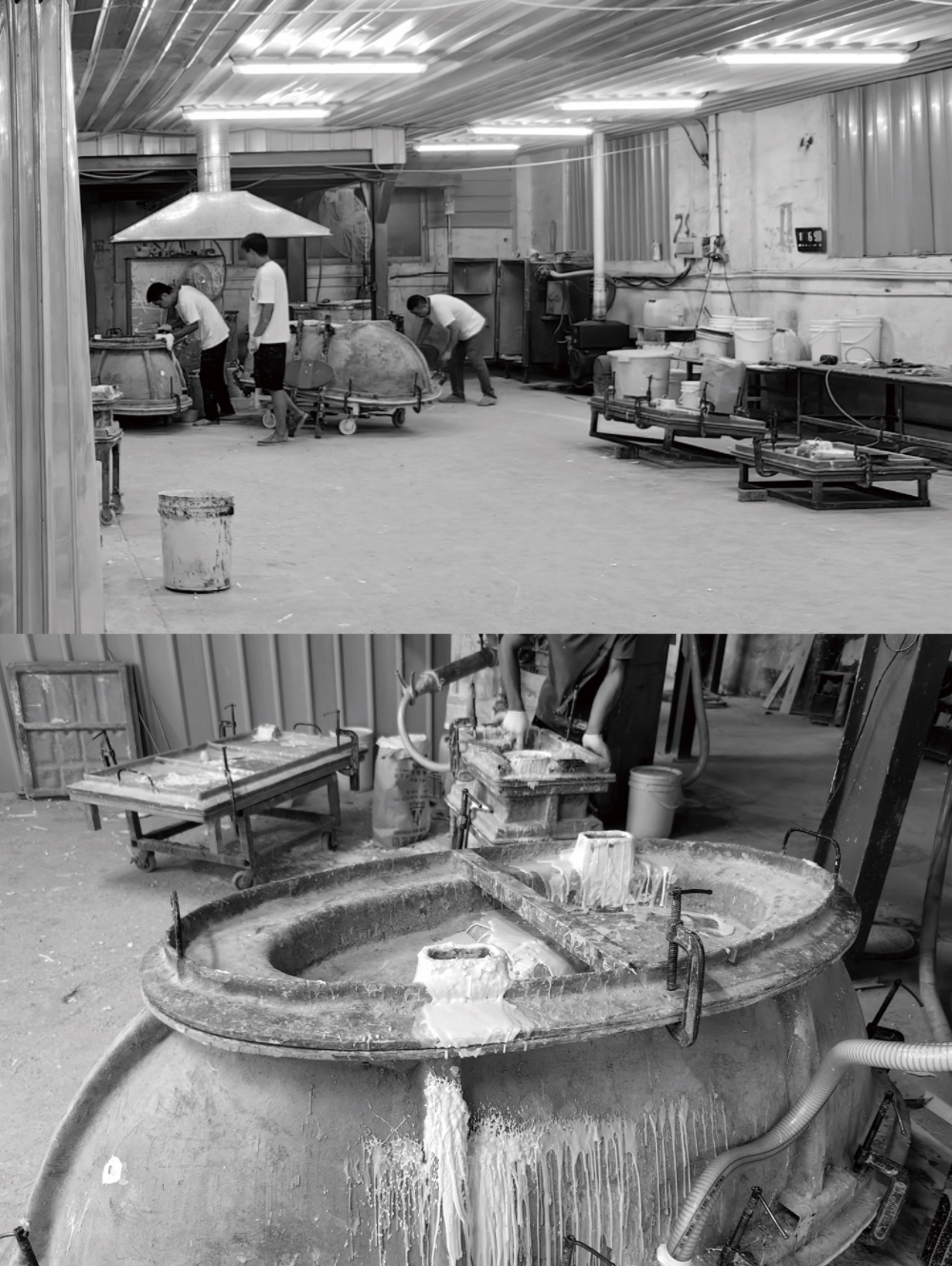
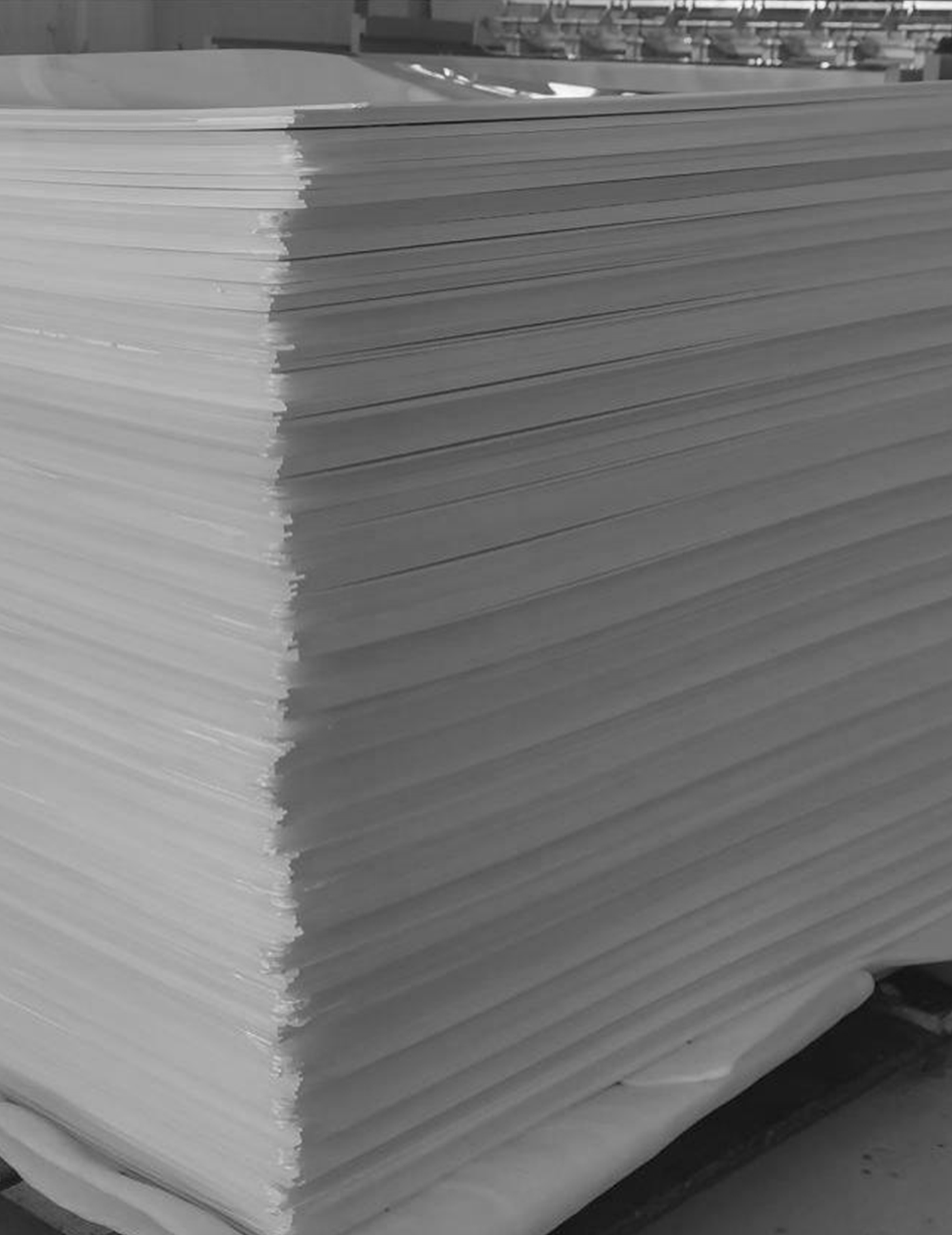
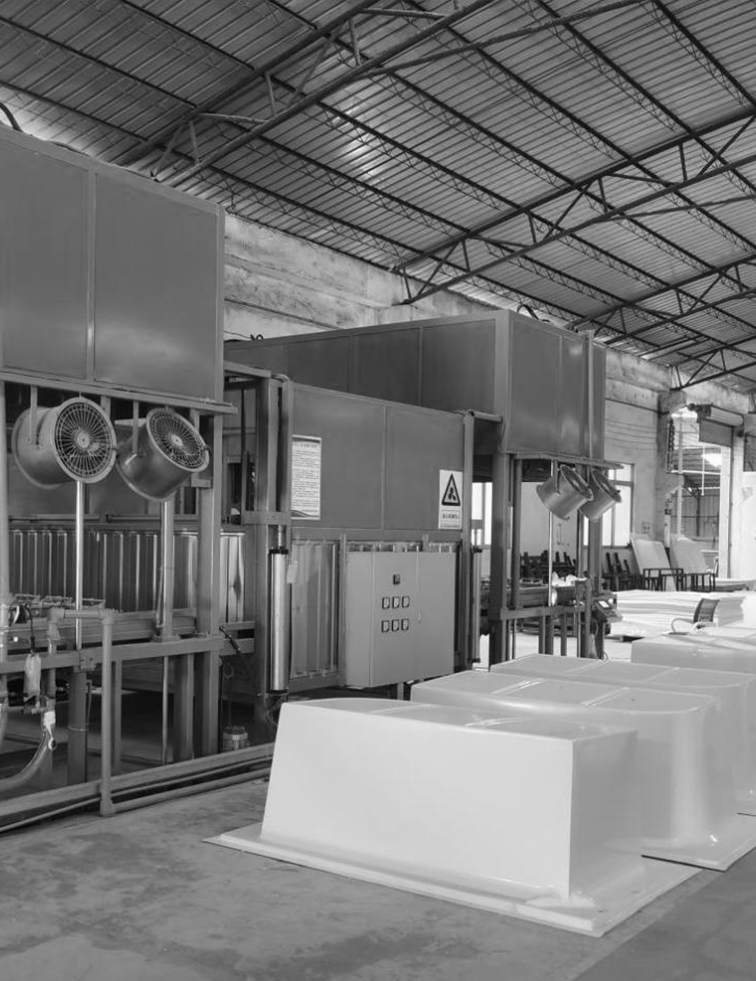
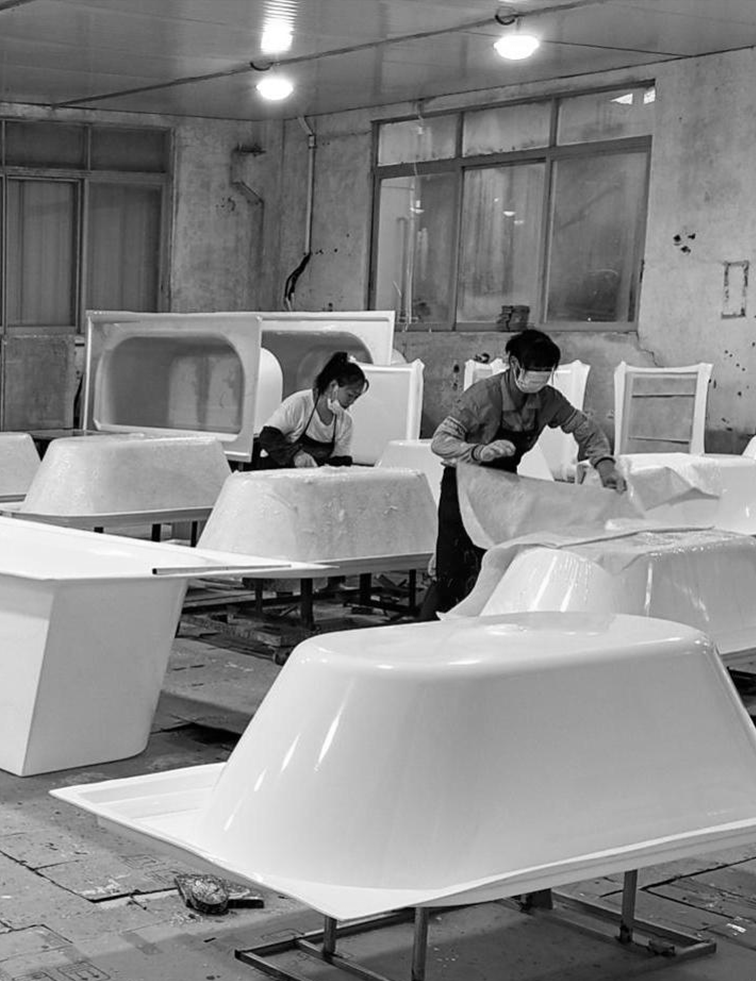
Vacuum-formed Acrylic Product




Packaging Introduction
B r o w n c o r r u g a t e d b o x + H o n e y c o m b p l a t e +
C l o t h b a g + C o r n e r p r o t e c t o r
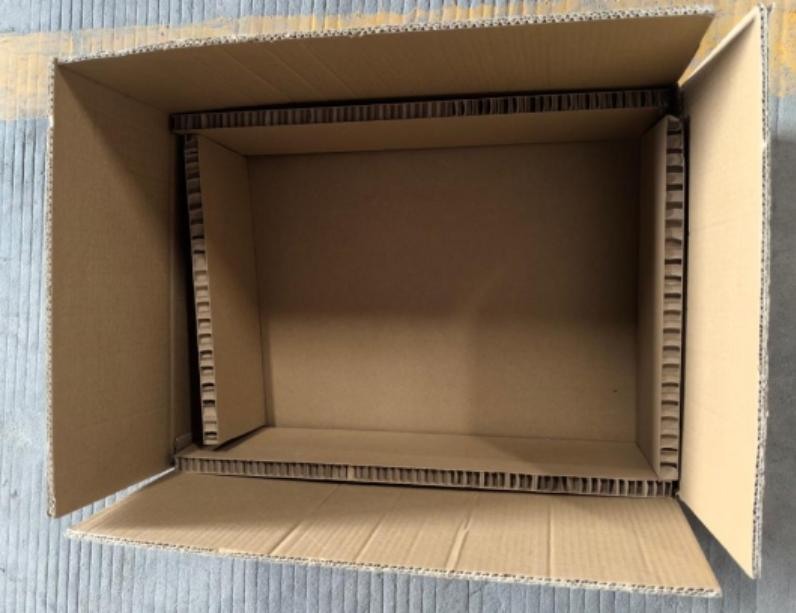
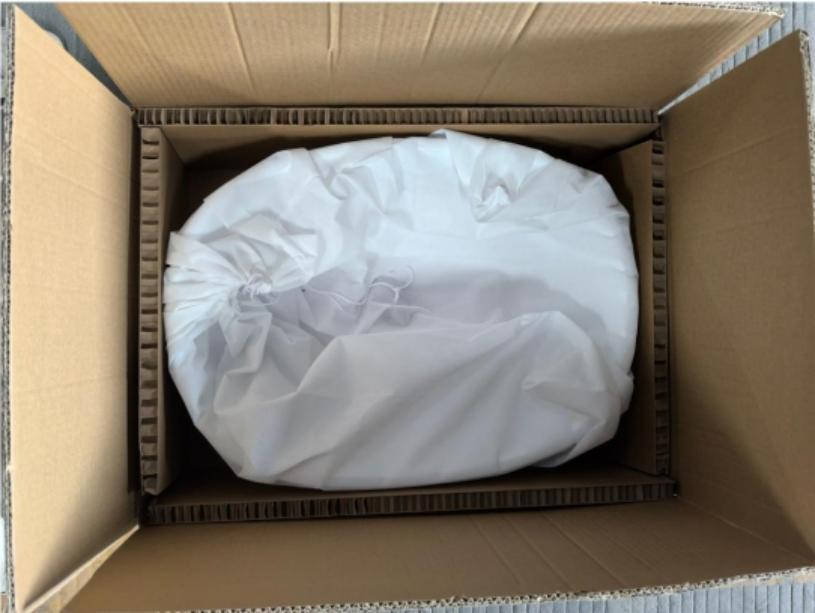
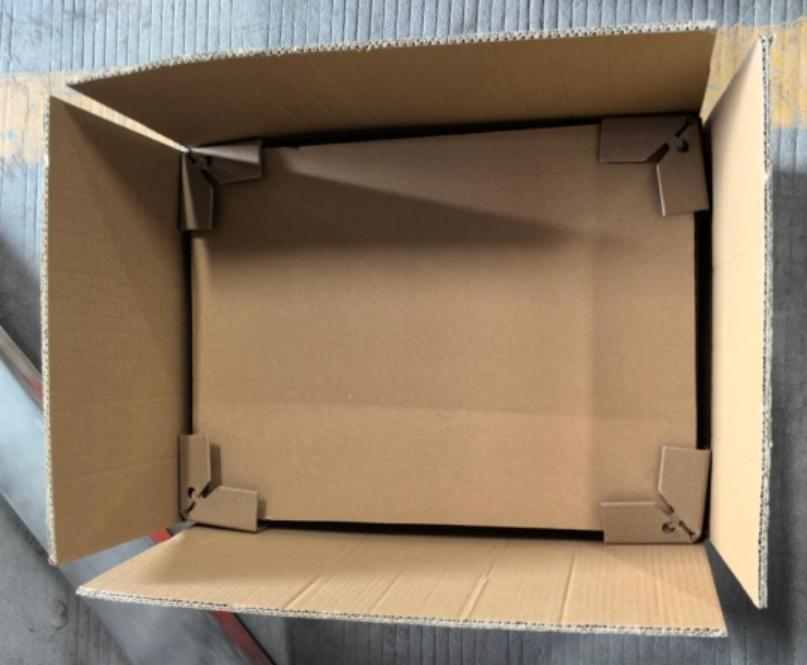
Based on the brown corrugated carton, honeycomb board is added to enhance the compressive resistance. The products are wrapped in cloth bags and corner protectors are used to safeguard the edges and corners, effectively preventing collision damage during transportation.

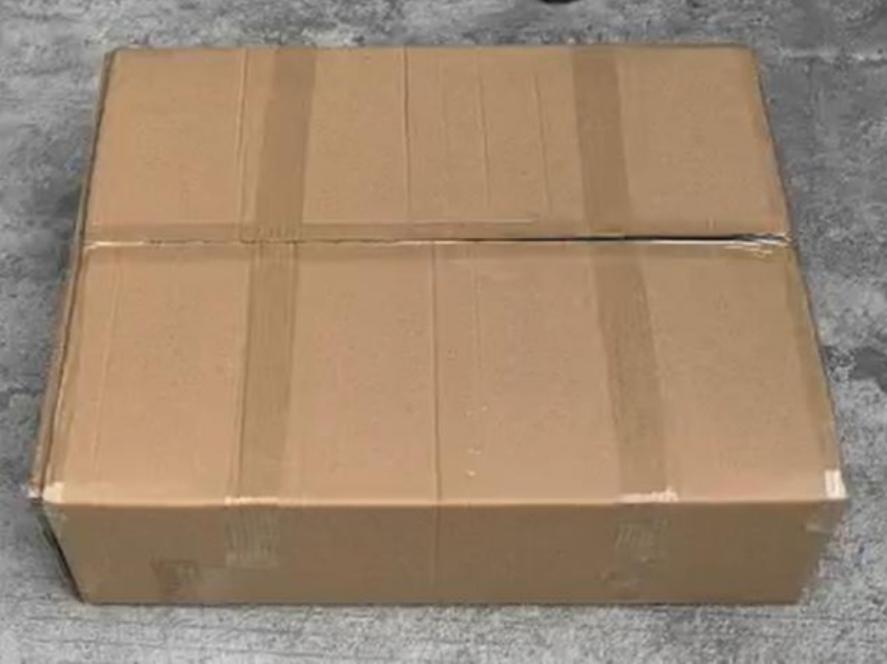
B r o w n c o r r u g a t e d b o x + F o a m + C l o t h b a g
The outer layer is made of brown corrugated cardboard, with foam padding inside. The product is wrapped in a cloth bag, featuring both protective and lightweight properties. It is suitable for various transportation scenarios.
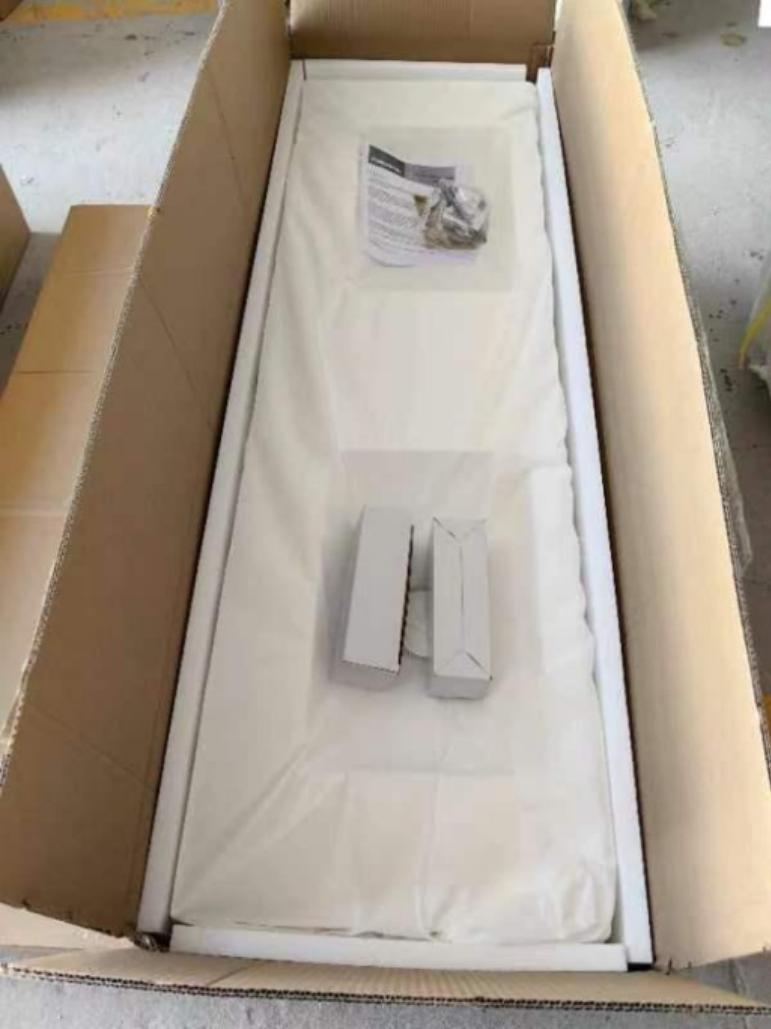
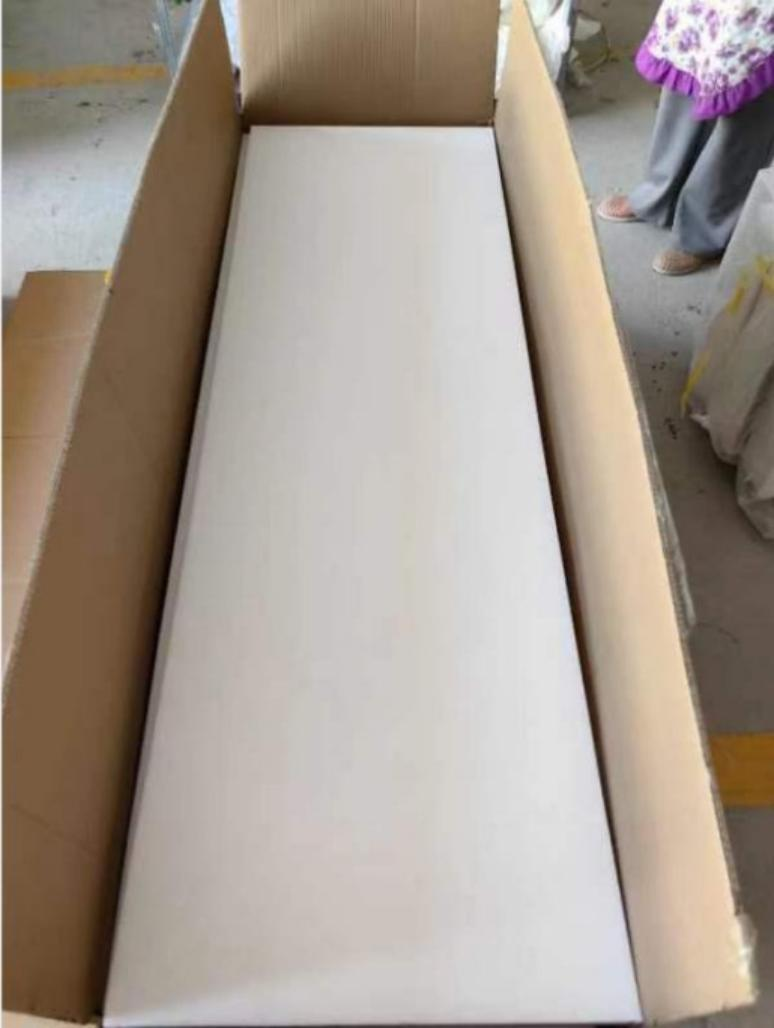

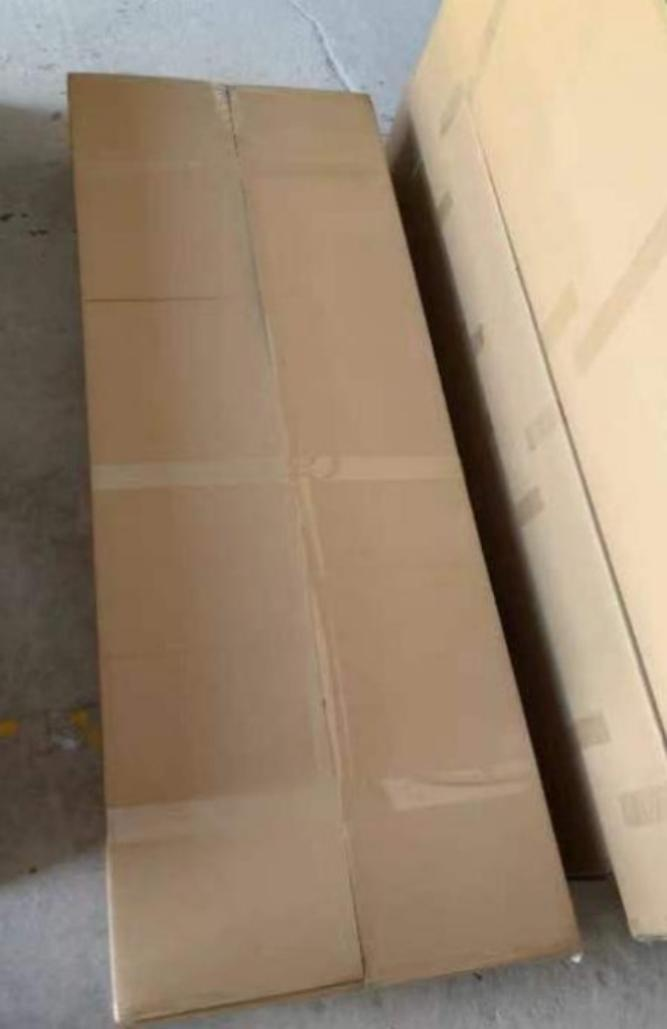
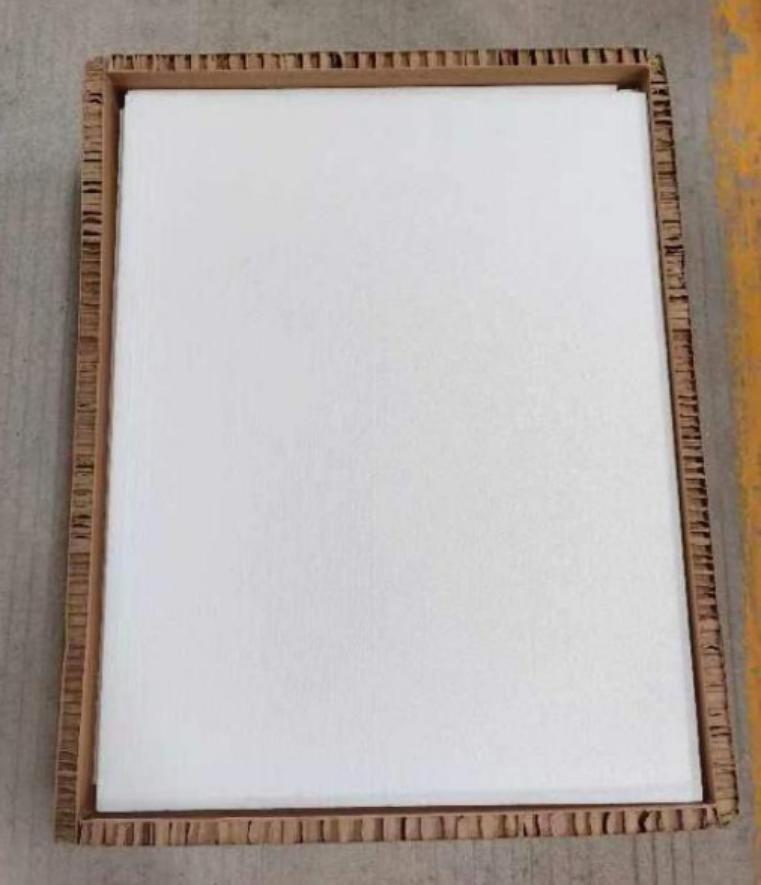
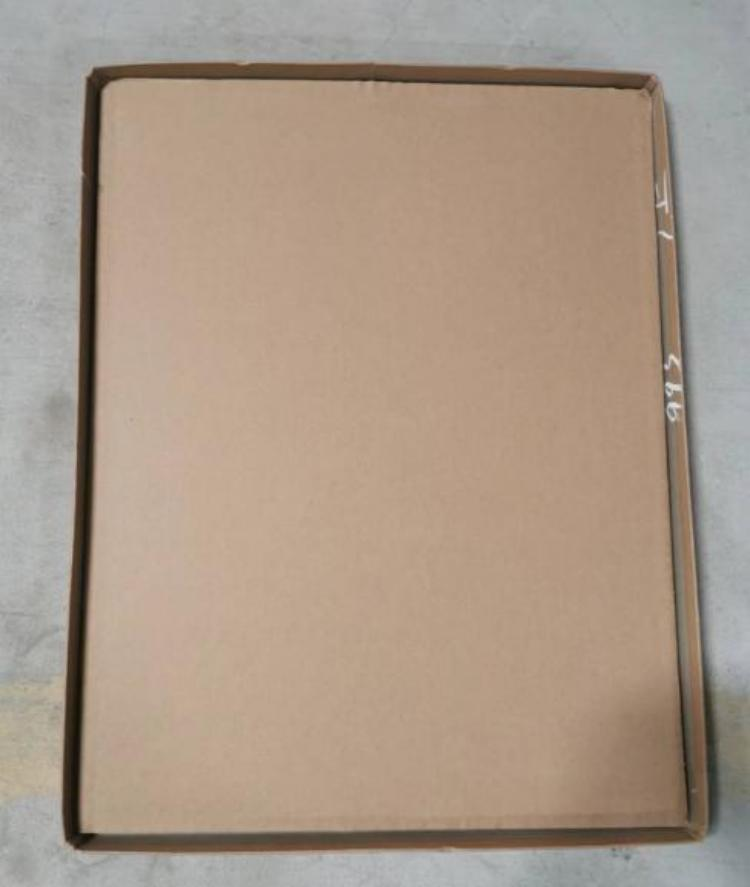
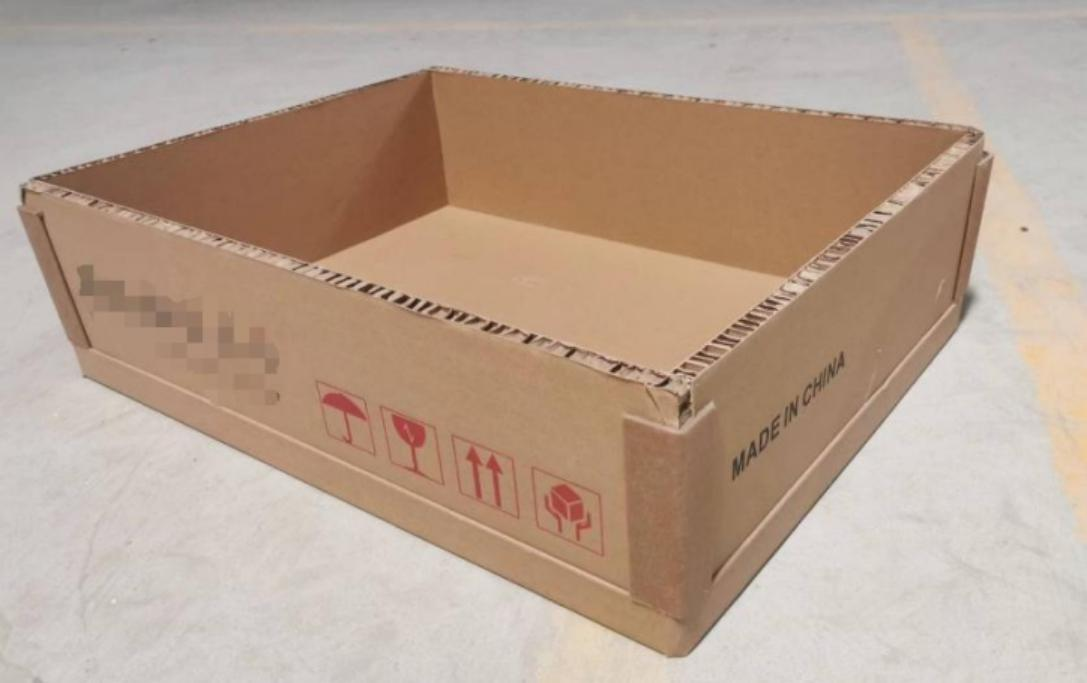
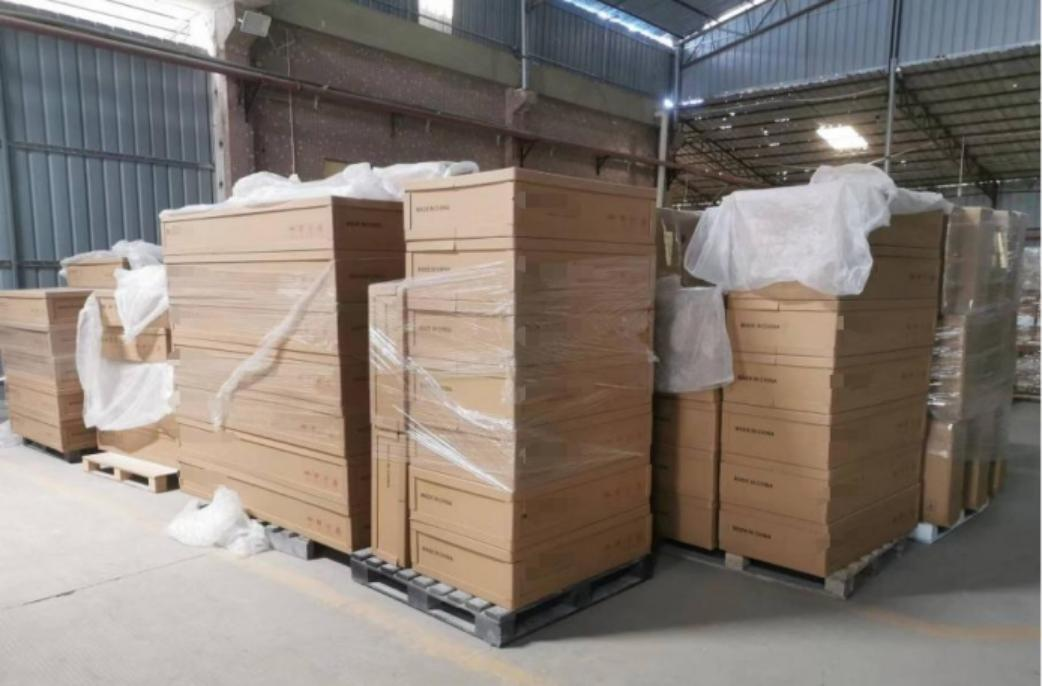
H o n e y c o m b C a r t o n + C l o t h b a g + F o a m
Wrap the products in cloth bags to prevent the product surfaces from coming into direct contact with the hard packaging, thereby reducing scratches and friction damage. The use of honeycomb paper boxes as the outer packaging provides excellent pressure resistance and buffering capabilities, enhancing the overall structural stability. Foam materials are used as fillers and buffers in key areas to absorb vibrations and impacts during transportation, protecting the corners and vulnerable parts of the product.



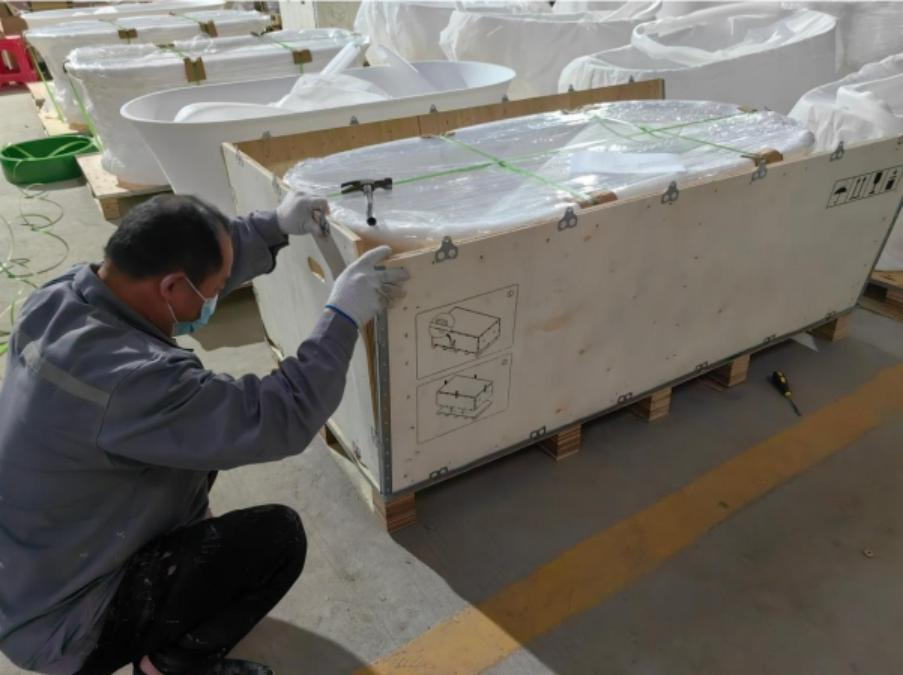
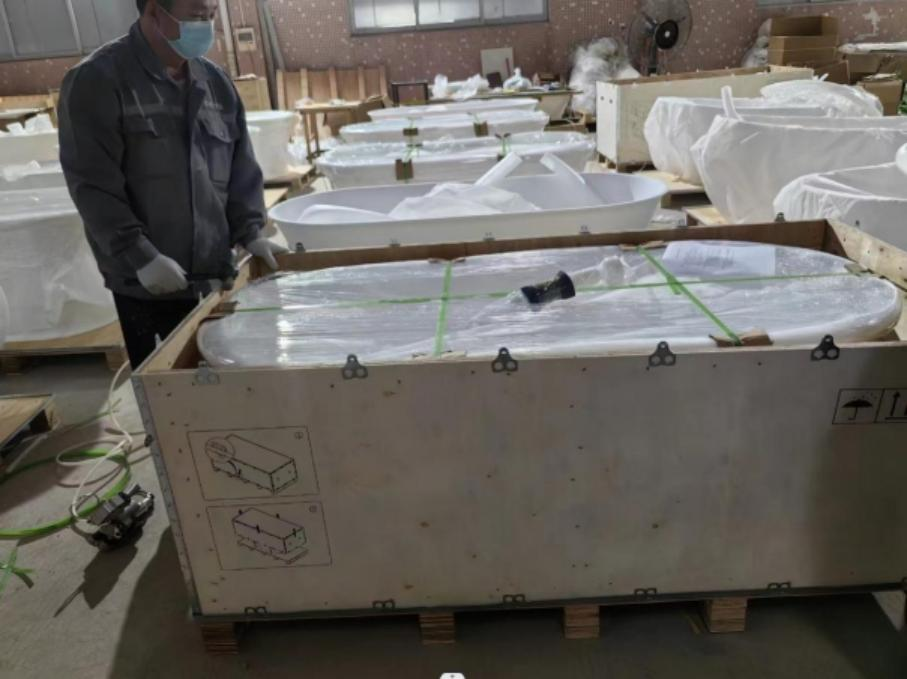
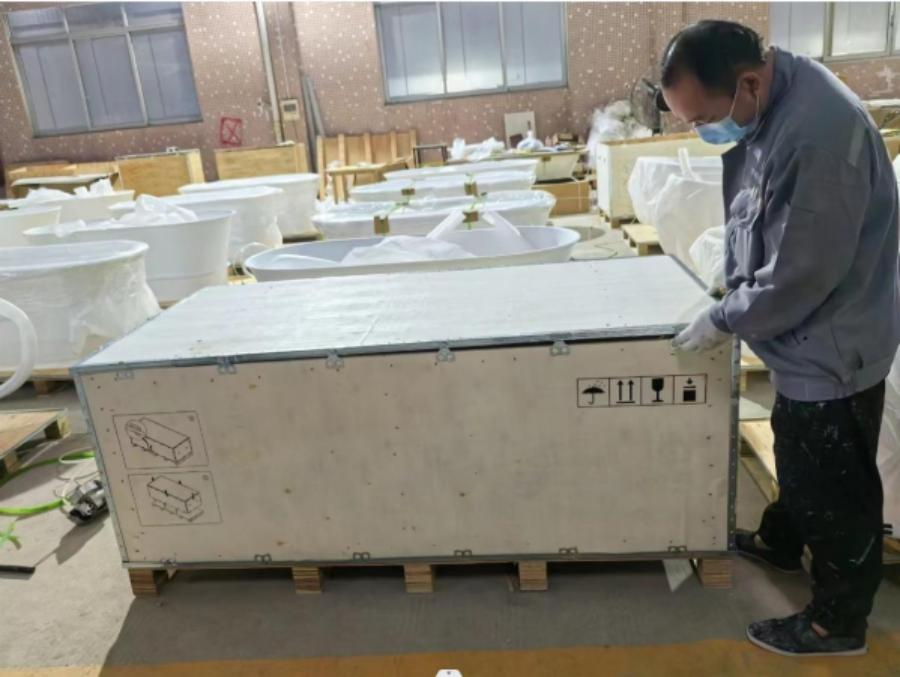
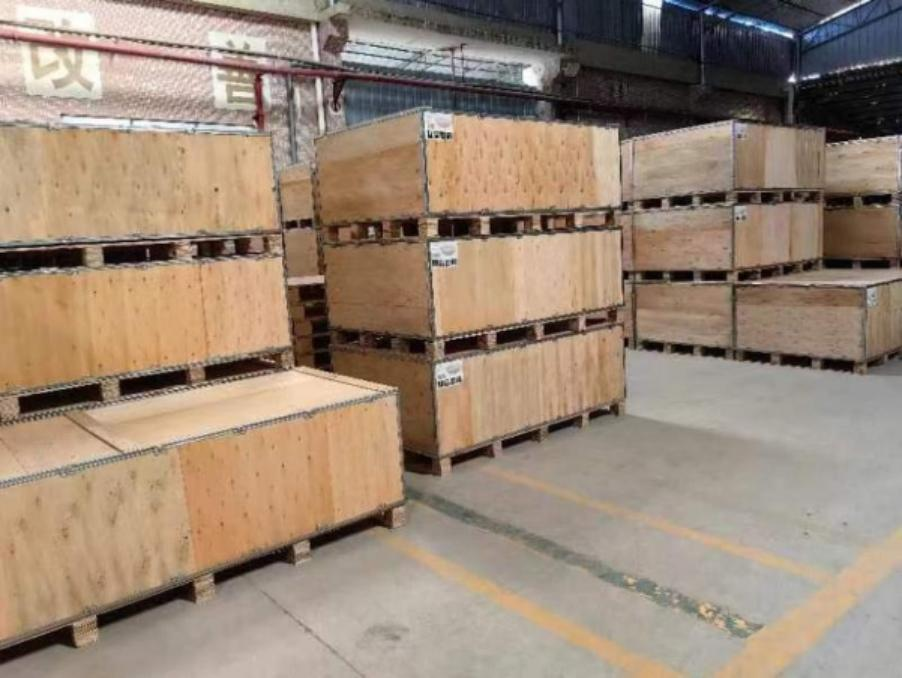
P l y w o o d W o o d e n c a s e w i t h l e g s + E P E F o a m + C l o t h b a g + P l a s t i c F i l m
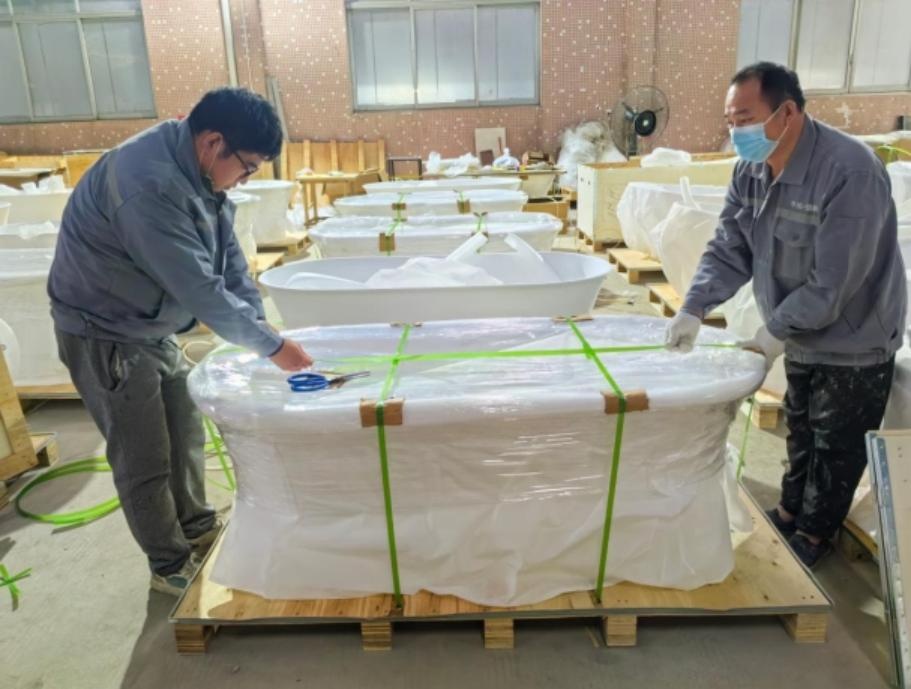
This bathtub adopts a four-layer composite packaging solution: the outermost layer is a glued board wooden box with legs, which provides strong support and protects against moisture and impact; the interior is filled with EPE foam for shaping and absorbing shocks; the middle layer is wrapped in a cloth bag for isolation to prevent surface scratches; the innermost layer is covered with plastic film, which serves as the basic protection against moisture and dust, thus achieving comprehensive transportation protection from the overall to the details.
Product Repair
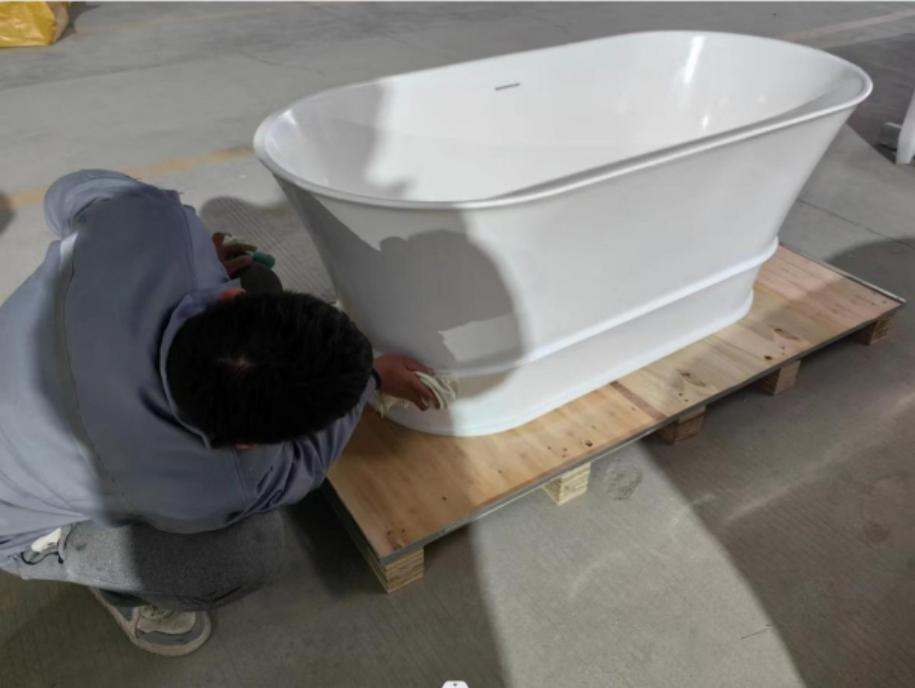
Matt White: You may polish away very fine scratches on your white solid surface products by scrubbing gently with a soft brush or plastic pad and a mild abrasive cream cleanser. Then, wash the whole area with plenty of clean water and repolish as before. lf the mark or scruff does not come out, we recommend using detergent. However, avoid overuse of detergent as it may have a negative effect on the product's finish.
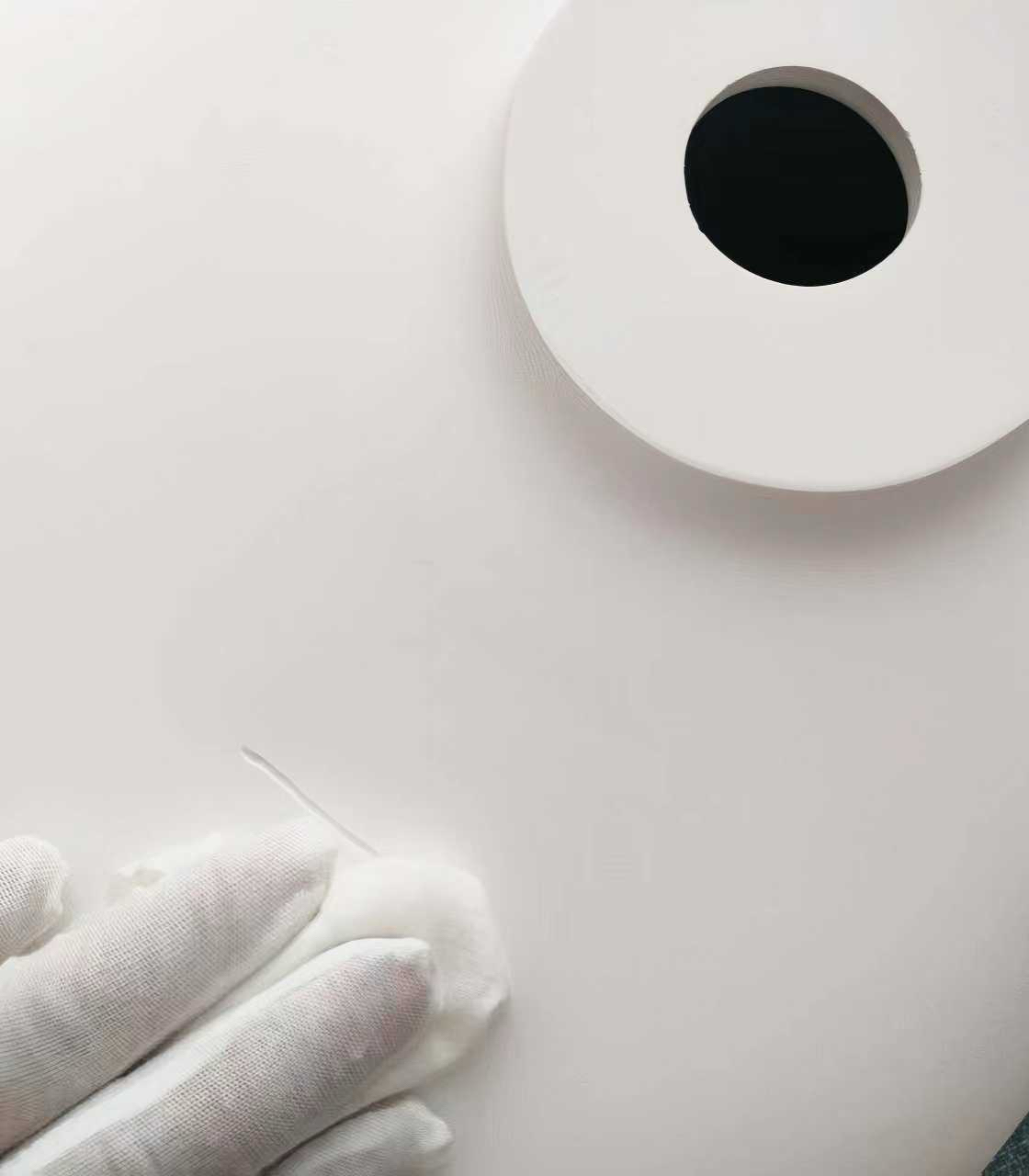
Step1-Preparation
Use warm water and a soft cloth to clean the area needing repair.

Step 2-Prepare
Repair Fluid Mix repair fluid in the ratio 100/1 100 parts - Pigment 1 parts -Curing Agent.
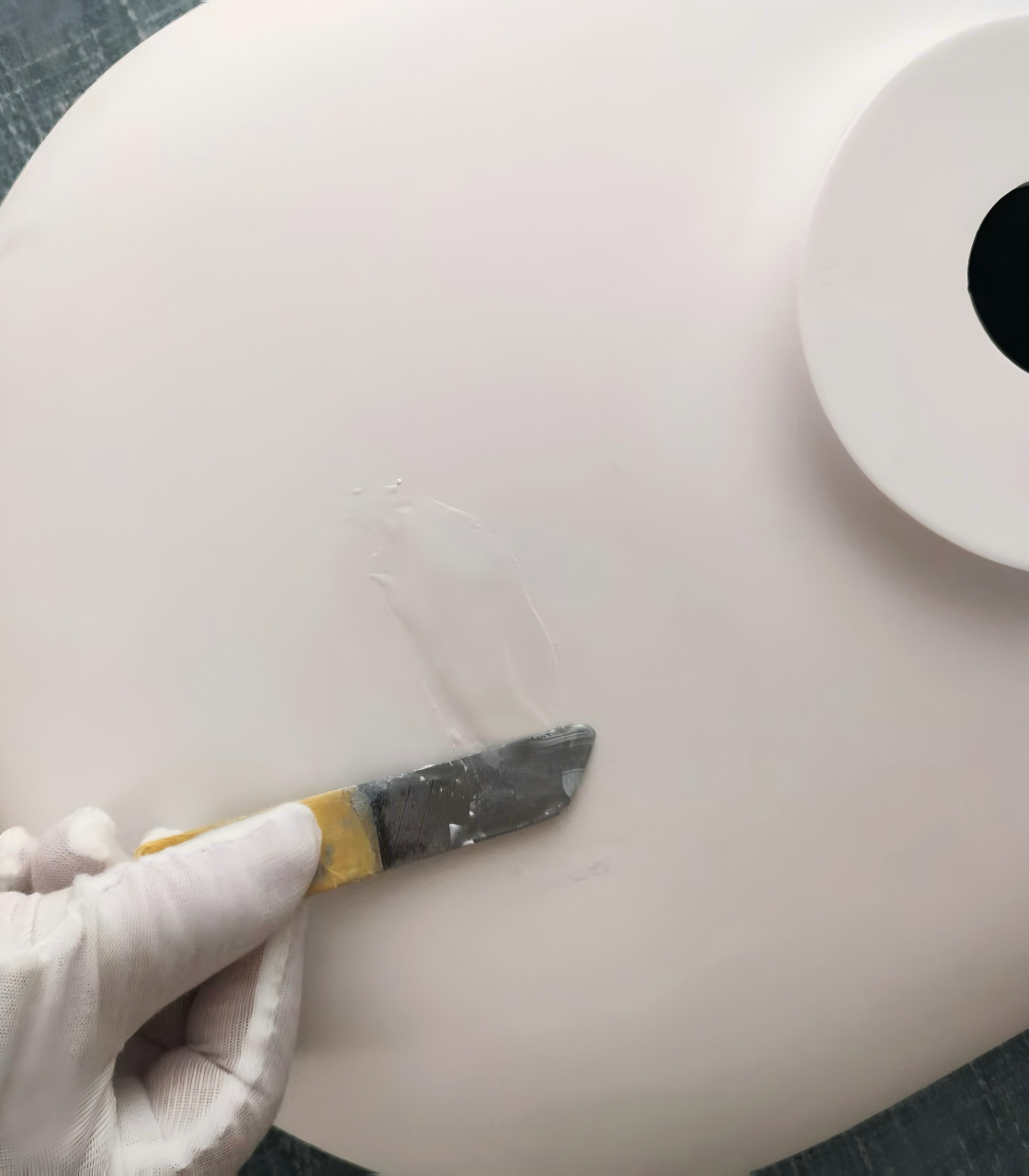
Step3-Application
Use a small spatula/trowel to carefully smooth repair fluid into and around the defect. Repeat 5-6 times until the defect is completely filled and no air gaps remain. Leave to dry for at least 8 hours.
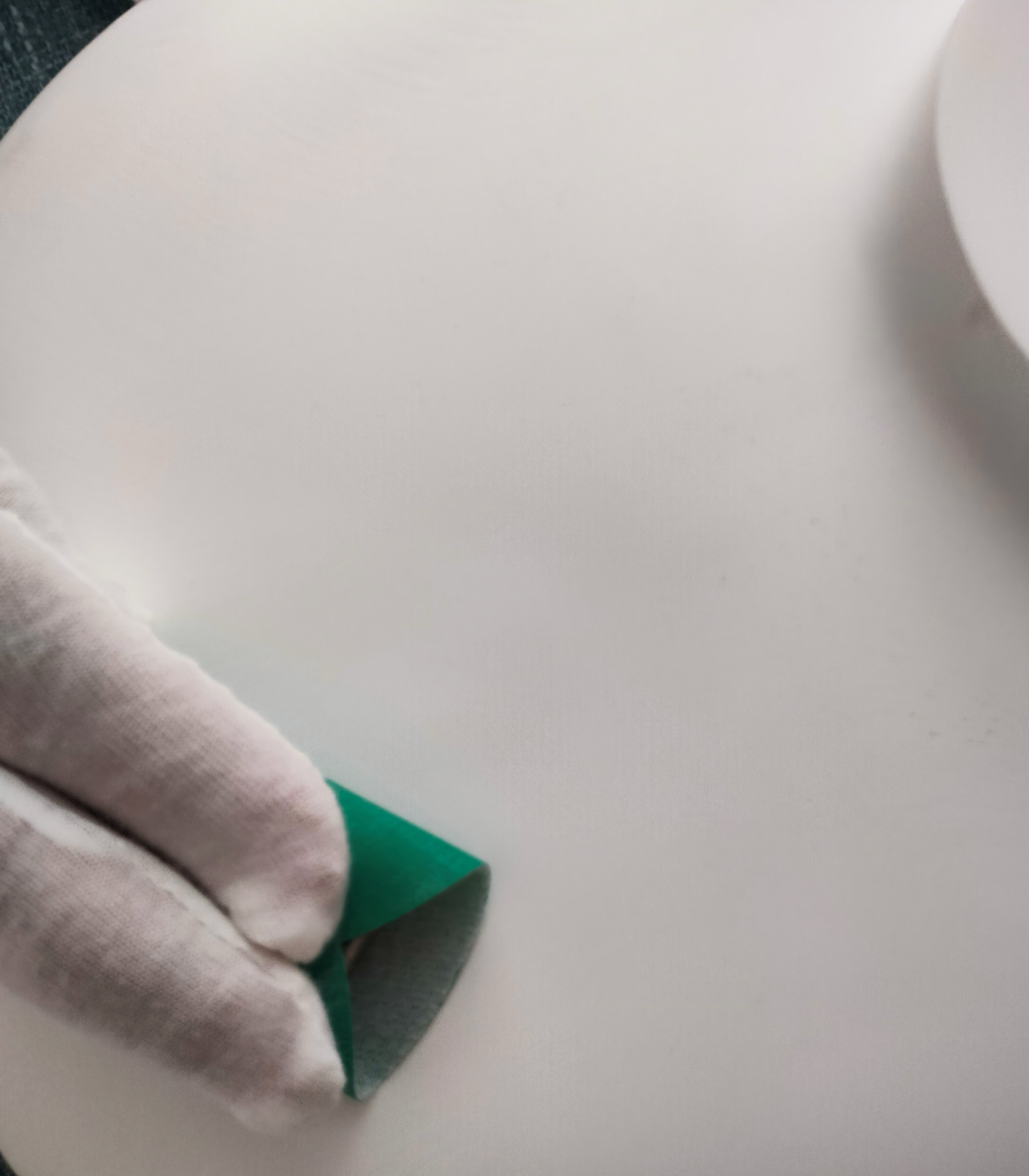
Step 4-Finishing
Check repair is completely dry Begin sanding the area with an 800 grit paper, then 1500 grit, then 2000 grit, until the surface is completelu smooth and even.